Nigeria as a Sesame Exporter
Nigeria is one of the world's top producers of sesame seeds (also known as beniseed), with production concentrated in the middle belt states — Jigawa, Benue, Nassarawa, Kogi, and Taraba. Nigerian sesame is predominantly white/cream in colour and is valued for its high oil content, typically between 48% and 52%.
Sesame is one of Nigeria's most consistently exported non-oil commodities, with annual export volumes in the hundreds of thousands of metric tonnes. Demand from Asian markets — particularly China, Japan, and South Korea — remains strong.
Key Export Markets
Understanding your target market is essential before approaching buyers. The major destinations for Nigerian sesame seeds each have distinct requirements:
- China — the world's largest importer of sesame seeds. Chinese buyers typically purchase in large volumes (1,000MT+) and are highly price-sensitive. They require purity of 99.95% or above and moisture content below 6%.
- Japan — a premium market that demands very high purity (99.98%+) and strict pesticide residue compliance. Japanese buyers pay a premium for consistently clean product and reliable supply.
- South Korea — similar requirements to Japan. Korean buyers are particularly focused on aflatoxin levels and pesticide residues.
- Turkey — a growing market for Nigerian sesame, used in tahini and confectionery production. Turkish buyers are less stringent on purity than Asian buyers but require competitive FOB pricing.
- Middle East — demand for sesame in the Gulf region is growing, driven by food manufacturing. Halal certification may be required.
Quality and Purity Standards
Sesame seed quality is assessed on the following parameters. Meeting these consistently is what separates exporters who build long-term buyer relationships from those who struggle to repeat sales:
- Purity — the percentage of clean sesame seeds free from foreign matter, other seeds, and damaged grains. Most buyers require 99.95% minimum; premium markets require 99.98%.
- Moisture content — must not exceed 6% for most markets. High moisture causes mould and reduces shelf life.
- Oil content — typically 48–52% for Nigerian white sesame. Higher oil content commands a premium.
- Aflatoxin levels — must comply with destination country limits. EU maximum is 10 ppb total aflatoxin; Japan is stricter.
- Pesticide residues — must comply with MRL (Maximum Residue Limits) of the destination country. This is a growing area of scrutiny, particularly for EU and Japanese buyers.
- Foreign matter — must be below 0.5% by weight.
Packaging and Logistics
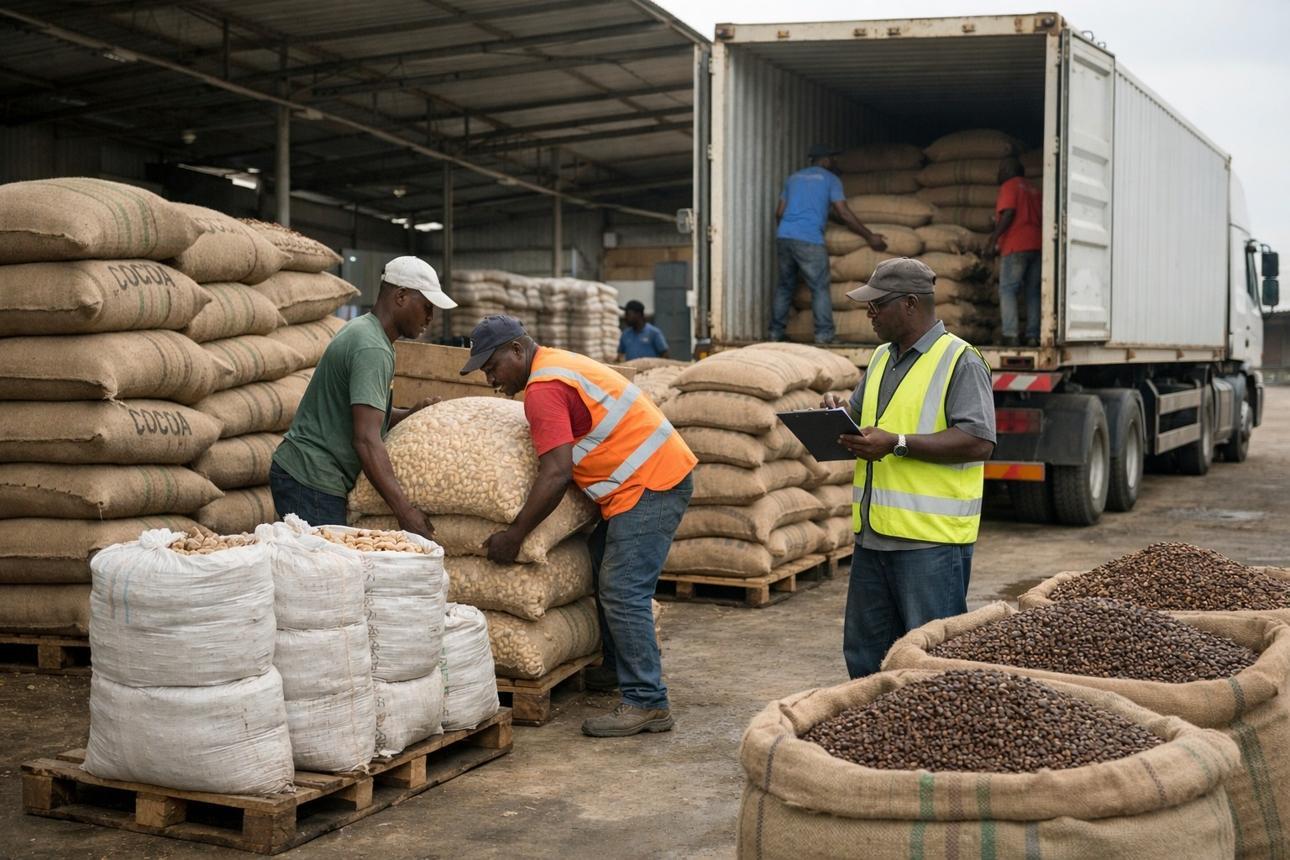
Nigerian sesame seeds are typically exported in new polypropylene (PP) woven bags of 25kg or 50kg net weight. Some buyers, particularly in Japan and South Korea, require vacuum-sealed packaging to preserve freshness.
Sesame is typically shipped in 20-foot or 40-foot containers. A standard 20-foot container holds approximately 24–26 metric tonnes of sesame seeds in bags.
Fumigation before loading is standard practice and is required by most buyers. A fumigation certificate must be provided with the shipping documents.
Pricing and Market Positioning
Nigerian sesame typically trades at a slight discount to Ethiopian sesame (which is considered the benchmark for East African white sesame) due to historical inconsistencies in quality. However, exporters who can demonstrate consistent purity and reliable supply can close this gap.
Pricing is quoted FOB Lagos or FOB Apapa. Monitor international sesame prices through commodity price platforms and NEPC market reports to ensure your pricing is competitive.
How Quardman Global Can Help
We source and export Nigerian sesame seeds to international buyers, handling quality verification, documentation, and logistics. Whether you are a buyer looking for a reliable Nigerian supplier or a producer seeking access to international markets, contact our team to discuss your requirements.
Need Help?
Have questions about this topic?
Our team can provide guidance tailored to your specific trade situation.
Ask Our Team