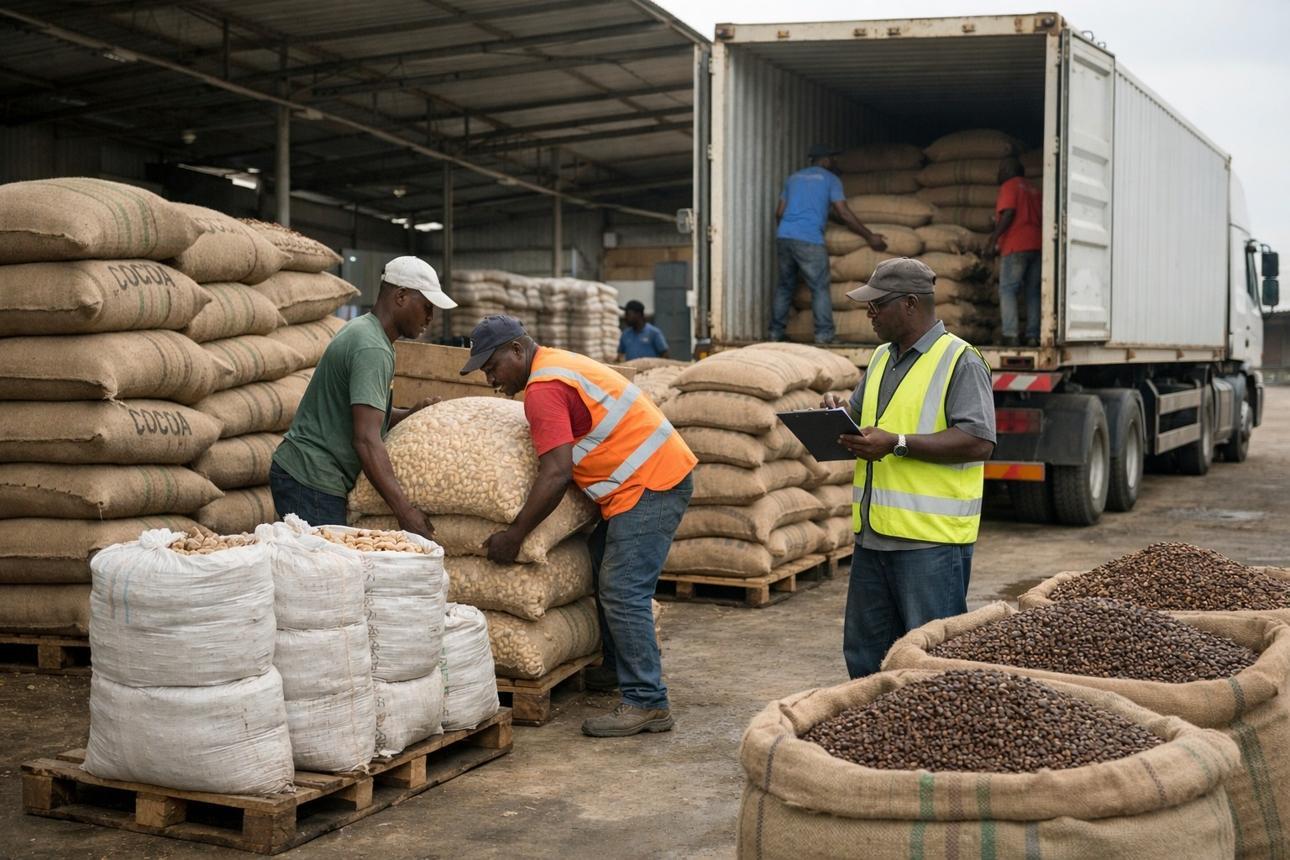
Why Nigerian Agricultural Exports?
Nigeria is one of Africa's largest producers of agricultural commodities. Cocoa, sesame seeds, ginger, cashew nuts, and a range of other products are grown in commercial quantities and are in consistent demand from buyers in Europe, Asia, and the Americas.
Despite this potential, many producers and entrepreneurs struggle to access international markets. The process can appear complex — involving regulatory requirements, documentation, logistics, and buyer negotiations. This guide breaks it down into manageable steps.
Step 1: Choose Your Product
Start with a product you can source reliably and in consistent quality. The most commonly exported Nigerian agricultural commodities include cocoa beans, sesame seeds, ginger, cashew nuts, hibiscus (zobo), soybeans, and shea products.
Consider the following when selecting your product:
- Availability and seasonality in your sourcing region
- Minimum export quantities required by international buyers
- Quality standards and grading requirements for that commodity
- Your ability to store and handle the product correctly before shipment
Step 2: Understand Grading and Quality Standards
International buyers purchase to specification. Before you approach any buyer, you need to understand the grading standards for your commodity. For cocoa, this means moisture content, bean count per 100g, and defect percentages. For sesame seeds, it means purity levels, oil content, and foreign matter limits.
The Nigerian Export Promotion Council (NEPC) and relevant commodity associations publish grading standards. Familiarise yourself with these before sourcing product.
Step 3: Register Your Business for Export
To export legally from Nigeria, your business must be registered with the Corporate Affairs Commission (CAC). You will also need to register with the Nigerian Export Promotion Council (NEPC), which issues the Exporter's Certificate required for most agricultural exports.
Depending on your product, you may also need registration or approval from NAFDAC (for processed food products) or the Standards Organisation of Nigeria (SON).
Step 4: Find Buyers
Finding reliable international buyers is one of the most challenging parts of starting an export business. Common channels include:
- Trade exhibitions and commodity fairs (e.g. ANUGA, SIAL, Gulf Food)
- B2B platforms such as Alibaba, TradeKey, and Global Sources
- The NEPC buyer-seller matching programme
- Direct outreach to commodity importers and trading companies
- Working with a trade facilitation company like Quardman Global
Step 5: Negotiate Terms and Prepare Documentation
Once a buyer expresses interest, you will need to agree on price, quantity, quality specifications, payment terms, and delivery terms (Incoterms). These are typically captured in a Sales Contract or Proforma Invoice.
From there, you will need to prepare the full set of export documents — including the Bill of Lading, Certificate of Origin, Phytosanitary Certificate, and any commodity-specific certificates. Our documentation checklist covers each of these in detail.
Getting Support
Exporting for the first time involves a steep learning curve. Working with an experienced trade facilitation partner can significantly reduce the risk of costly errors — whether in documentation, product grading, or buyer negotiations.
Quardman Global provides end-to-end export support for Nigerian agricultural commodities. Contact our team to discuss your product and requirements.
Need Help?
Have questions about this topic?
Our team can provide guidance tailored to your specific trade situation.
Ask Our Team